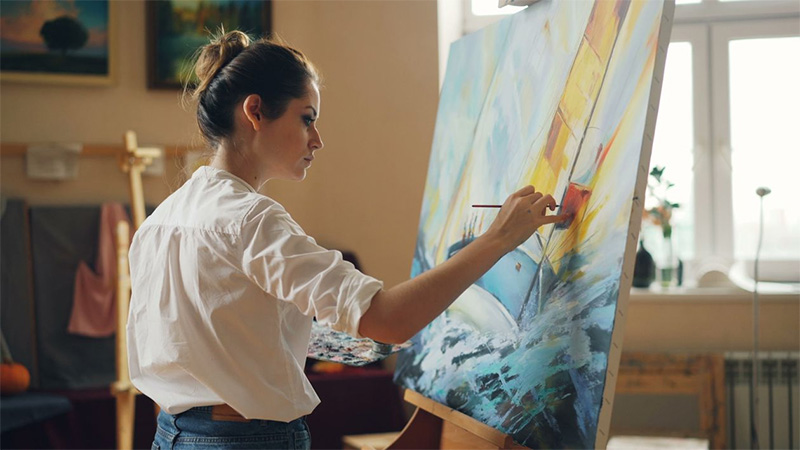
Impressionism didn’t arrive like a polite memo delivered to the Paris art world. It barged in, wet paint still glistening, and dared everyone to admit what eyes actually do when they look. The old system wanted myth, polish, and a kind of noble stiffness that made even a picnic look like a coronation. The new painters wanted air. Weather. The glare that ruins a perfect outline. The real scandal wasn’t a new brushstroke. It was a new loyalty. These artists chose sensation over script, the moment over the monument, and they turned the simple act of seeing into a public argument.
A Rejection Letter With Teeth
The official Salon loved authority. It loved history painting, heroic poses, and surfaces scrubbed so smooth that any trace of human labor vanished. That taste didn’t just guide careers. It controlled rent money, reputation, and the right to matter. Then came the refusals. The juries turned away works that looked unfinished, too bright, too ordinary, too much like life caught mid-breath. The painters didn’t respond with quiet shame. They responded with independent shows that acted like counterprogramming, a loud alternative to a single gatekeeper. This wasn’t a gentle reform movement. It was a fight over who defines “skill,” and who decides what counts as serious subject matter.

Sunlight as a Conspiracy
The real star of Impressionism wasn’t any single painter. It was light, fickle and bossy, changing every color in the scene while the hand tries to keep up. That obsession pushed artists outdoors, where shadows turn blue and reflections pull strange tricks. A haystack stops being a haystack and starts being a timekeeper. A river stops being a river and becomes a mirror that won’t sit still. Critics mocked the results as messy or careless, which revealed the joke. The “mess” came from honesty about perception. Vision doesn’t trace perfect boundaries. Vision grabs patches, flickers, hints.
Friends, Rivals, and Rent
The movement ran on companionship and friction. Painters shared studios, traded advice, gossiped about sales, and snapped at each other over style and credit. Money stayed tight, often humiliatingly tight, and that pressure shaped the art as much as any theory. A cheap model, a familiar street, a borrowed garden, a café scene that didn’t require expensive props. Dealers entered the story as power brokers, because someone had to translate scandal into income. Rivalries mattered too. One artist chased shimmer and speed. Another demanded structure. Another turned to domestic interiors and proved that modernity didn’t require smokestacks.
Modern Life, Unheroic and Loud
Impressionism didn’t paint the past to flatter the present. It painted the present to expose it. Train stations, boulevards, dance halls, boating trips, theaters. These scenes carried a new tempo, and the painters caught that tempo with broken color and cropped views that feel almost accidental. Photography hovered in the background like an irritating sibling, forcing painters to answer a blunt question. If a camera can record detail, what should painting do? The answer came back as mood, motion, and the private experience of public spaces. Even leisure looked complicated. The brush didn’t moralize. It observed.
The stories behind Impressionism refuse to behave like a single legend about brave geniuses marching together. The movement looks messier, more human, and more interesting. Institutions pushed back, not because the painters lacked talent, but because the painters threatened a hierarchy of taste. Light pushed harder than any critic, demanding speed and surrender. Friendship helped, rivalry sharpened, and poverty kept the subject matter close to home. Modern life supplied the noise, the crowds, and the odd intimacy of strangers sharing a streetcar. What this truly signals is simple. Impressionism didn’t just change how paintings look. It changed what painting admits about seeing.
Photo Attribution:
1st & featured image by https://www.pexels.com/photo/young-artist-painting-on-canvas-in-studio-36764900/
2nd image by https://www.pexels.com/photo/no-text-in-pieces-of-white-paper-4271935/

