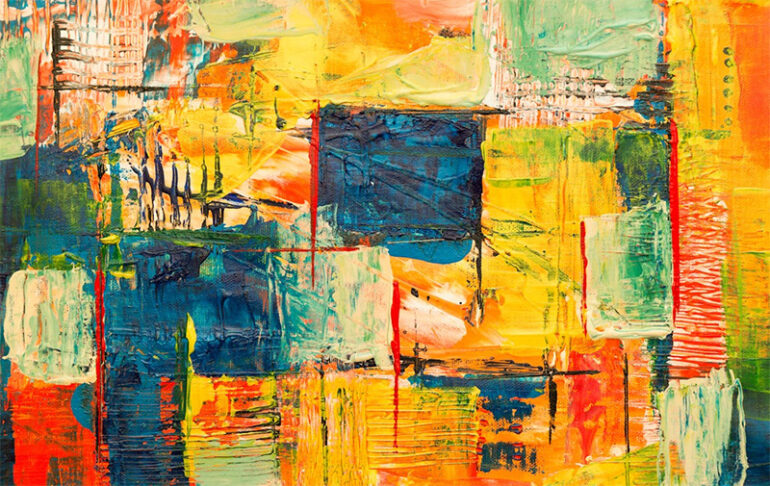
Abstract art divides rooms faster than politics at Thanksgiving. Some dismiss it as a toddler’s tantrum with a paintbrush; others call it the purest form of expression. Both viewpoints miss the point entirely. Abstract art doesn’t aim to copy the world, it wants to capture something deeper, something words fumble to describe. Think of ideas, moods, or rhythms made visible. Ignore that voice demanding recognizable shapes. Instead, focus on raw techniques and intent. That’s where breakthroughs happen, on the edge of chaos and order, right where logic lets go and intuition takes over. And in that wild space? Techniques matter more than ever.
Color as Language
No one escapes color, the eyes insist on reacting first, always ahead of any rational analysis. In abstract works, color is never just decoration; it becomes vocabulary, grammar, punctuation, a kind of speech for emotions rather than thoughts. What does a thunderstorm-blue next to sickly yellow say? Maybe nothing polite, or maybe everything unspoken in a single glance. Artists use contrasting blocks or delicate washes not by accident but because each hue holds weight and tension. This isn’t about picking pretty shades; it’s about drama and dynamism thrown onto canvas without apology. An entire conversation unfolds, loud or quiet, between each brushstroke.
Gesture Above Precision
Reject perfection, this creed sits at the core of abstract technique. The hand’s motion gets top billing while accuracy sits quietly in the back row, if it’s present at all. Consider action painting: paint splatters mid-flight aren’t sloppy distractions but declarations of creative willpower. Observe an artist pacing before massive canvases, launching pigment like jazz musicians riffing across measures, spontaneity trumps calculation every time. Intentional messiness sends signals: here’s energy uncaged, thought undone by movement itself. It takes nerve to embrace these gestures, no editing allowed once pigment hits surface, but therein lies authenticity most can only chase.
Texture Tells Its Own Story
Flat images rarely suffice when emotion runs thick; texture steps in where color leaves off. It isn’t just about what’s seen but what could be felt if fingertips were allowed close enough, raised ridges from heavy impasto scream louder than smooth stretches ever could. Materials take center stage: sand mixed into paint creates grit under light; palette knives carve out canyons nobody predicted five minutes ago. Sometimes scraps get glued on for extra bite, a collage within a painting’s borders, and suddenly depth emerges both visually and emotionally. Every groove whispers history: stubbornness here, surrender there.
Experimentation Over Tradition

Abstract artists build careers out of breaking rules so old they’ve turned invisible from repetition alone. There are no fixed recipes, only endless adaptation and surprise lurking behind even simple tools like tape or stencils pressed into wet paint and then ripped away for sharp lines born from chaos itself. Found objects morph into brushes; spatulas replace sable bristles overnight, all bets are off as surfaces become playgrounds for chance encounters between mind and matter alike. Clinging to tradition invites stagnation; chasing accidents often reveals fresh paths forward no theory could predict.
For anyone willing to step past comfort zones, abstract art delivers freedom wrapped in challenge, techniques serve as guides but never restraints. Color sets mood while gesture broadcasts intent without apology; texture begs attention through touch imagined more than experienced, and experimentation unlocks doors best left wide open anyway. The result? Artworks pulse with personal urgency rather than distant imitation, they stand alone as evidence that meaning sometimes lives only in risk-taking marks painted bold against uncertainty itself.
Photo Attribution:
1st & featured image by https://www.pexels.com/photo/multicolored-abstract-painting-1269968/
2nd image by https://www.pexels.com/photo/photo-of-multicolored-lamp-decor-2902536/

