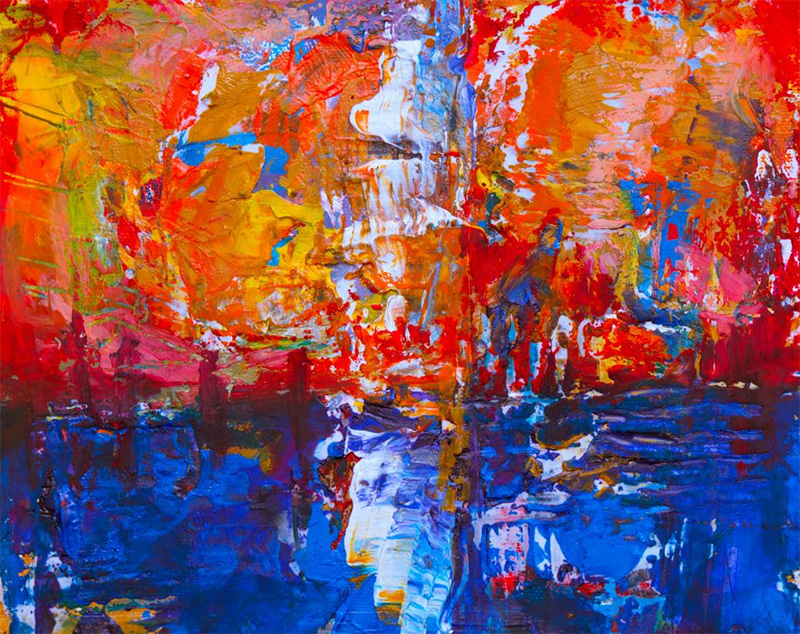
Meaning in abstract art doesn’t arrive like a mail carrier with a labeled package. It arrives like weather. Sudden. Local. Unfair. One viewer faces bruised purple and feels grief. Another feels calm. That split isn’t failure. It’s the work doing its job. Abstract art refuses the lazy bargain of illustration, where everyone agrees what the thing is and congratulates themselves for recognizing it. Recognition is cheap. Attention costs something. Abstract art asks for that payment, then returns stranger currency: sensation, memory, pressure in the chest, a thought without a noun.
Meaning Without a Picture
A painting doesn’t need a horse to speak about speed. It doesn’t need a face to speak about loneliness. Representation often acts like a translator who talks too much. Abstract art cuts that translator out. Color, edge, weight, repetition, and scale do the talking. This alarms people who treat meaning as a scavenger hunt for objects. Where’s the subject. What is it of. That question treats art like a receipt. Abstract work treats art like a tuning fork. The subject becomes forces. Push and pull. Heat and chill. Compression and release. When those forces feel true, meaning locks in as lived sensation.
The Body Understands First
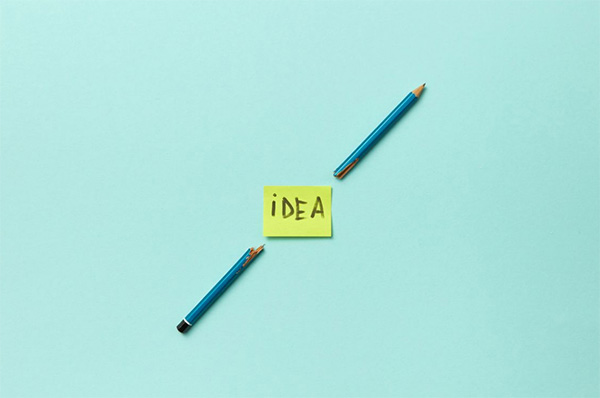
Brains love to brag, yet bodies do the early reading. A thick black bar can feel like authority. A trembling line can feel like doubt. A smeared passage can feel like time chewing on memory. None of this requires a dictionary. It requires perception. Museums turn this into a social test, a terrible habit. People whisper, perform cleverness, and miss the fact: the nervous system reacts before the inner lecturer clears its throat. Abstract art turns meaningful when it triggers a bodily response and gives that response room to become thought. What looks random often carries control of rhythm, density, and pause. Music proved this.
History Hides in the Paint
Abstract art never floats free of the world. Materials and gestures carry history like fingerprints. A drip can signal freedom to one era and macho posturing to another. A hard edge can recall industrial order and the clean lie of mid-century optimism. A grid can echo domestic labor and the intelligence of pattern making, which critics used to dismiss because it didn’t smell like hero worship. Even refusal can protest. When propaganda floods every surface, ambiguity grows teeth. Meaning expands because context presses on the work, and the work presses back.
The Viewer Finishes the Circuit
Abstract art becomes meaningful through collaboration. The viewer supplies memory, bias, mood, and patience. The canvas supplies structure and constraint. This isn’t a game where anything goes. Bad abstraction collapses because it offers no discipline. Good abstraction sets boundaries, then invites interpretation inside them, like a room that changes with different light. One person brings hospital corridors and reads white as dread. Another brings desert skies and reads white as clean air. Both can hold if the painting supports them through coherence of form. Meaning turns into an event. The event repeats and shifts because no one enters a gallery as the same person twice.
Abstract art earns meaning when it refuses to babysit and still communicates. The work doesn’t hand over a neat moral. It sets up conditions for attention. It organizes chaos, or it exposes chaos already living in a tidy mind. That organization can feel like honesty. It can feel like danger. It can feel like relief, which critics often treat as suspicious. A serious artwork can delight and still cut. Meaning shows up when the piece holds together under scrutiny and keeps generating experience instead of collapsing into a single translation. A painting that stays alive after the first glance doesn’t need a story painted on it. It already has one, written in perception.
Photo Attribution:
1st & featured image by https://www.pexels.com/photo/abstract-painting-1563016/
2nd image by https://www.pexels.com/photo/a-word-idea-written-on-a-sticky-note-placed-between-broken-pencils-6991802/

