Artemisia Gentileschi keeps showing up because modern culture keeps circling the same old problems with fresh lipstick. Power. Credibility. Who gets believed. Who gets paid. Who gets called “difficult” for doing the exact thing a man gets praised for. Her paintings refuse the polite distance that museums sometimes crave. They don’t whisper. They stare back. That matters now, in an era addicted to branding and allergic to consequences. Her career punctures a myth that talent rises on merit alone. Talent fought for air in her case. Talent negotiated contracts, managed patrons, moved cities, and kept producing work that feels hot to the touch.
A Painter Who Wouldn’t Behave
Gentileschi matters because she demonstrates what the art world pretends to love and often punishes in practice. Ambition. Technical confidence. A refusal to shrink. Her brushwork doesn’t ask permission. Her compositions seize the viewer by the collar and drag the eye where the story hurts. That directness reads as “modern” because contemporary audiences crave honesty but often settle for performance. Gentileschi offers no performance. She offers decisions. Look at how she builds a scene with light, stages bodies like arguments, turns drapery into moral weather. Genius appears, yes. Discipline appears more. A working professional stands in place of the lone prodigy myth.

Violence, Agency, and the Price of Being Believed
Her relevance also sits in the ugly space between art and testimony. Gentileschi lived inside systems that treated women’s words as negotiable. That fact doesn’t remain in the archive. It bleeds into the way people read her subjects, especially when she paints women under threat or women striking back. A lazy viewer treats those scenes as gossip with paint. A serious viewer treats them as a study of agency under pressure. Gentileschi didn’t invent violence in art. She refused to make it decorative. She kept the grit, the weight of arms, the stubborn physics of a body that resists.
Baroque Craft With a Business Brain
The modern fixation on “creative entrepreneurship” would sound ridiculous in seventeenth-century Rome and Florence, yet Gentileschi practiced it without slogans. She navigated patrons, letters, payments, deadlines, and reputation. She built a career across courts and cities. She didn’t wait for a gatekeeper to declare her legitimate. Legitimacy followed the work and the deals. This matters today because the romantic image of the artist as a fragile saint harms working artists. Gentileschi shows another model. She paints with bravura, then she negotiates. She meets a commission, then she slips in sharper psychological truth.
A Canon That Needs Repair, Not Apologies
Gentileschi matters because the canon remains a machine that repeats its favorites unless someone jams a wrench into the gears. People still treat art history like a parade of solitary male geniuses, with women as muses, footnotes, or exceptions. Gentileschi doesn’t fit the footnote slot. She competes on the same wall, in the same genre, with the same stakes. Her command of Caravaggist drama and chiaroscuro forces museums and classrooms to do actual work. Tokenism fails here. The paintings demand serious looking. That demand changes syllabi, collecting priorities, and stories told to the public.
The reason Gentileschi matters today doesn’t rest on a slogan about representation, even if representation counts. She matters because her art complicates the neat stories that modern audiences tell about progress. She shows cruelty without glamour. She shows strength without turning it into a cartoon. She shows professionalism without begging for approval. The paintings keep asking uncomfortable questions. What does courage look like when it has to pay rent. What does justice look like when the courts shrug. What does excellence look like when critics search for reasons to call it an accident. Gentileschi answers with paint, not speeches. Museums can hang the canvases. Viewers still have to face them.
Photo Attribution:
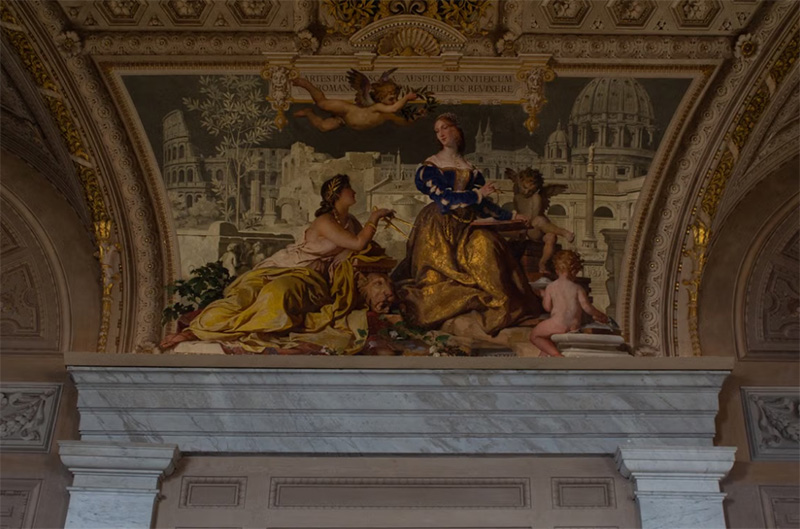
1st & featured image by https://www.pexels.com/photo/intricate-renaissance-mural-with-classical-figures-30726092/
2nd image by https://www.pexels.com/photo/a-grayscale-of-a-woman-with-nose-piercing-smoking-a-cigarette-11971787/

