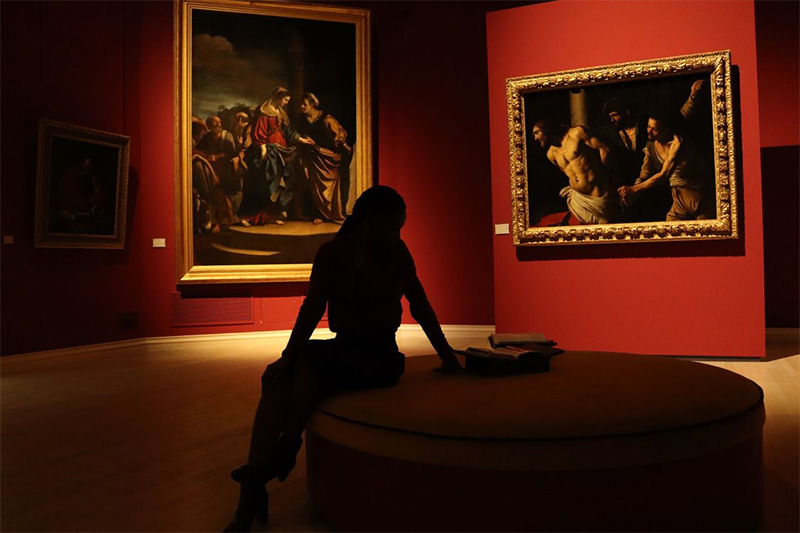
Light doesn’t just reveal art. It edits it. A painting in cool daylight can look restrained, then turn lush under a warm lamp at night. That shift isn’t minor. It’s central to the viewing experience. Museums know this. Collectors learn fast when a favorite work looks wrong beneath the wrong bulb. Art never reaches the eye untouched. Light acts like a translator, and some translators ruin the sentence. The same painting, print, or sculpture can seem intimate, severe, radiant, or dead depending on brightness, direction, color temperature, and shadow. That fact shapes feeling, memory, judgment.
Color Under Pressure
Color changes first. Warm light pushes reds, oranges, and yellows forward. Skin tones often look richer. Gold leaf glows. Cool light does the reverse. Blues sharpen. Whites look cleaner, sometimes harsher. Artists build relations between colors with care. Shift the light and the hierarchy shifts too. A red accent that once dominated may soften. A green shadow may turn muddy. Anyone who has seen a painting in a gallery and book knows the shock. Light caused much of that disagreement. It barges in and rearranges the argument.
Shadow Builds Form
Flat light kills drama. There, a blunt truth. When illumination comes from every direction, texture and depth can collapse. Brushstrokes lose their bite. Chisel marks on sculpture fade into surface. Directional light gives form its backbone. A beam across an oil painting can reveal ridges of paint like tiny landforms. Marble under strong side light gathers shadows in folds and recesses, which makes volume feel convincing. Lighting isn’t only about seeing more. It’s about seeing structure better. Human vision reads edges, contrast, and shadow with ruthless efficiency. Remove those cues and the work can look dull even when visible. Visibility alone isn’t perception.
Mood, Memory, and Bias
Viewers like to imagine that seeing is objective. Charming fantasy. Perception drags emotion into the room every time. Dim light can make art feel intimate, sacred, or secretive. Bright, even light can make the same object feel public or clinical. That shift affects judgment. A spotlight on one sculpture doesn’t just help the eye. It tells the mind that this object matters. Retail stores use the same trick. Churches figured it out long ago. Warm light often feels domestic because homes trained viewers to link that glow with comfort. Cool light can suggest modernity, distance, or cleanliness. It wraps itself around interpretation.
The Museum’s Tightrope
Curators and conservators face a tradeoff. Strong light may help viewers see detail, yet too much light damages many materials over time. Works on paper, textiles, photographs, and some pigments can fade with prolonged exposure. A museum can’t flood everything with brilliance and call it clarity. It must ration light with discipline. Daylight offers beauty, though it shifts by hour and weather. Artificial light offers control, though bad fixtures can distort color or create glare that turns a painting into a mirror. LEDs improved matters, though not all LEDs behave equally well. Placement matters. A slight change in angle can remove glare or create it.
Art doesn’t live in a vacuum, and light proves the point. Change the lighting and the object’s apparent color, depth, texture, and emotional charge all move with it. That doesn’t mean the artwork lacks stability. It means viewing always involves conditions, and those conditions matter more than many people admit. A painting under soft warm light may invite contemplation. The same painting under a cool bright wash may push the eye toward analysis. Sculpture can swell into presence or shrink into surface. Serious display never treats lighting as decoration. It’s interpretation by other means. Light acts like an active collaborator, shaping what the eye believes it has seen.
Photo Attribution:
1st & featured image by https://www.pexels.com/photo/silhouette-of-a-person-sitting-on-round-chair-3724836/
2nd image by https://www.pexels.com/photo/a-distorted-photograph-of-a-person-10219028/

