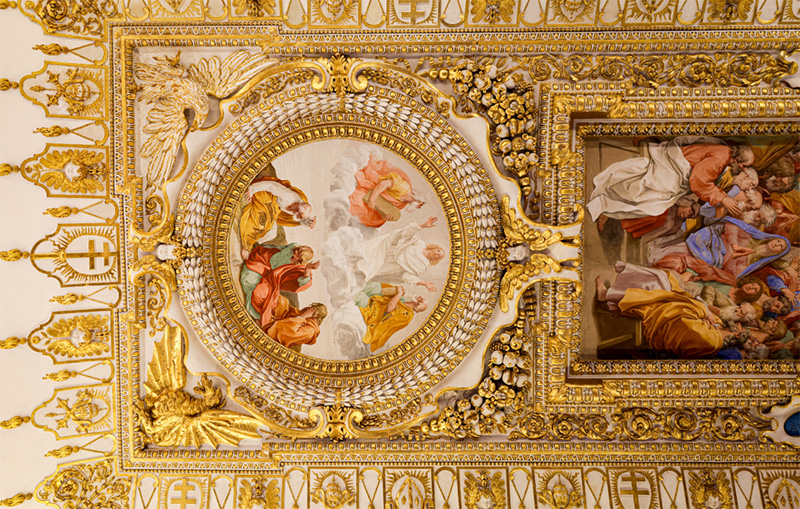
Baroque painting refuses to sit still. That’s the first fact worth stating, and it explains the electric charge these works still carry. A canvas from this period often looks less like a picture than a seized event, a drama caught mid-breath. Faces twist. Hands reach. Fabric whips through space as if wind itself has entered the room. This art doesn’t ask for polite admiration. It grabs the eye and drags it into action. Baroque painters didn’t just want to describe the world. They wanted to make paint behave like life itself, with danger, motion, heat, and theatrical force.
Motion Caught Hot
One reason these paintings feel alive lies in their obsession with movement. Renaissance art often prized balance, calm, and order. Baroque painters took that stability and cracked it open. Figures lean, turn, lunge, recoil. Nothing rests for long. Even a saint in prayer seems to tremble with inner pressure. Drapery doesn’t hang. It surges. A diagonal line pushes the eye forward. It creates suspense. It implies that the next second matters. That sense of imminent change gives these images pulse, almost like cinema before film existed.
Light as a Weapon
Light in Baroque painting doesn’t merely illuminate objects. It stages an argument. Caravaggio understood this with brutal clarity. A shaft of brightness cutting across darkness can turn a common room into a moral battlefield. One face emerges. Another sinks back. A hand glows, and suddenly that hand matters more than the background. This contrast creates focus, though that sounds too tame. It creates shock. It tells the eye where to go, then dares it to resist. Darkness becomes active rather than empty. Light behaves like revelation, and revelation always feels alive.
Bodies That Mean Something
Baroque painters understood a truth that too many academic systems flatten into jargon. The body thinks. A bent knee, a clenched jaw, a thrown-back head can carry more emotional weight than a page of explanation. In these works, anatomy never serves cold display alone. Muscles tighten because fear tightens them. Fingers spread because awe, grief, terror, or desire has rushed through the nerves. Gesture becomes language. Expression becomes event. Even crowded compositions stay readable because the human figure acts like a flare in darkness. The body in the painting meets the body in the viewer. That exchange is immediate.
The Theater of Belief
Baroque painting grew in a culture that prized persuasion. Religion, monarchy, public ritual, all of it demanded images that could move people, not merely inform them. That pressure mattered. It produced art with a stage actor’s timing and a preacher’s intensity. Space opens like a set. Curtains part. Heaven descends into ordinary rooms. Martyrs collapse in full view. Even still life can feel dramatic, as if fruit and silverware have joined a performance about appetite, vanity, and decay. The style knew that conviction often arrives dressed as spectacle, and paint became the costume.
What gives Baroque painting its living force is not one trick or one formula. The vitality comes from pressure on every front at once. Movement drives the composition. Light cuts meaning into space. Bodies speak with urgent clarity. Theater turns belief into something visible and almost touchable. That combination still works because human perception hasn’t changed as much as fashion likes to pretend. Eyes still chase contrast. Minds still respond to drama. Flesh still recognizes flesh. A great Baroque painting doesn’t whisper from the wall. It acts. It insists. It keeps happening every time someone stands before it and lets the scene strike home.
Photo Attribution:
1st & featured image by https://www.pexels.com/photo/intricate-baroque-style-painted-ceiling-art-35709021/
2nd image by https://www.pexels.com/photo/anonymous-person-imitating-terrible-monster-behind-window-4349902/

