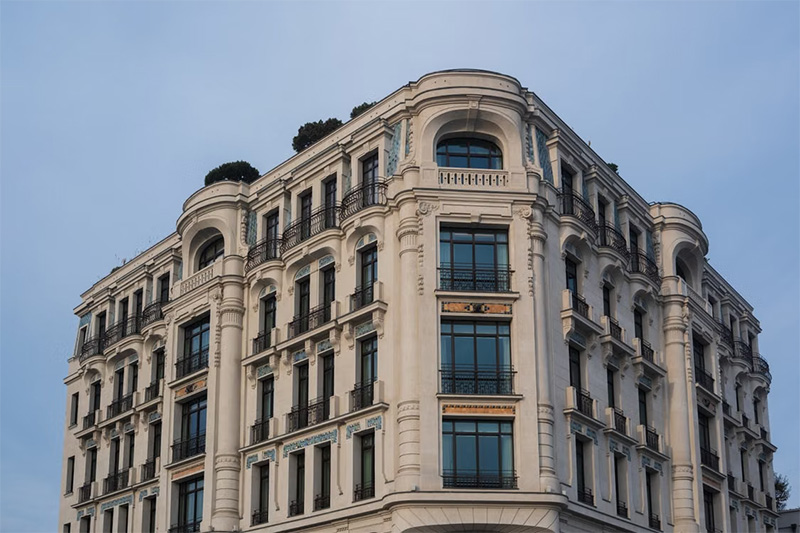
Cast aside the myth that modernity bloomed in a stylistic vacuum. Style does not sprout from nowhere. The winds that sculpted today’s sleek branding and ergonomic chairs were blowing more than a century ago, whispering in the ornate lines of Art Nouveau. Imagine smoke curling around the columns of fin de siècle Europe. A time when architects and designers, tired of industrial-age rigidity, decided to let the natural world take the lead. Vines twist, dragonflies hover, and suddenly a door handle isn’t just a tool but a statement. The seeds of modern design, surprising as it seems, were carried in the tendrils of this decorative revolution.
Nature on the Drawing Board
Forget straight lines for a moment. The old guard dreaded messiness. Art Nouveau embraced it. Architects began drawing inspiration from the sinuous forms found in botanical illustrations and marine biology. Trees, insects, peacock feathers. These were not decorations, they were blueprints. The result? Everyday objects transformed. Staircases rippled like vines. Street lamps mimicked lily buds. The point isn’t just aesthetic delight. This movement triggered a vital shift. People began thinking that design could embody living energy. The sterile and mechanical? Out. Life itself seeped in. Critics scoffed. Trend chasers gasped. The world moved. Modern design would later crave this very liveliness.
The Machine Bows to the Hand
Factories had a grip on society’s throat, churning out cookie-cutter products. Art Nouveau punched a hole in that monotony. Craftsmen started flexing their skill, challenging the iron rule of the assembly line. The hand, not the machine, had last word over what a chair or a lamp could be. No more pure functionality. Details mattered. People noticed. What this truly signals is the birth of that now-tired phrase: ‘human-centered design.’ Mass production learned a lesson. The spirit of Art Nouveau sneaked into later movements. Without that revolt, IKEA wouldn’t be selling flat-pack furniture with a wink in its design. It’s chaos that pushed the machine to adapt.
Total Design: The Immersive Experience
Step into an Art Nouveau interior and instantly the walls whisper that nothing exists alone. Architects like Victor Horta ripped down boundaries. Every lamp, couch, stained window, and custom tile formed a dialogue. To these designers, a building was not a shell. It acted as an ecosystem. Modern hospitality design owes a debt here. The boutique hotel as experience? That’s Art Nouveau thinking in disguise. This vision infected modernism with new ambition. From Apple’s seamless gadgets to interactive spaces, the echoes continue. The idea of total design isn’t quaint nostalgia, it’s the skeleton holding up the whole world of contemporary design practice.
Color, Curves, and the Shock of the New
Those swirling lines and luscious color palettes? They did more than decorate posters for absinthe. Eyes widened. Repetition evaporated. The public was forced to reconsider what familiar objects could become. Doors, shoes, teapots, anything could be sculptural, alluring, unpredictable. Clearly, Art Nouveau designers had no fear of making things strange. The lesson took root. Even today, designers chase originality by channeling those curves and colors. The urge to break convention, the refusal to be dull, can be traced directly to this moment. What appears new carries the fingerprints of these early radicals. Forget safe choices, the world remembers the beautiful risks.
There’s no getting around it, the decorative movement dismissed by some as mere ornament wound up as modern design’s hidden backbone. While technology keeps pushing boundaries, people still crave touches of the organic, the crafted, and the daring. Walk through any city and see those echoes, curved facades, customized details, playful branding. Critics love to pretend that invention works like a straight line. History begs to differ. The so-called old-fashioned gave the new its sense of possibility. What Art Nouveau proves, again and again, is that reinvention doesn’t always come from breaking with the past. Sometimes it flowers by making the old strange and alive.
Photo Attribution:
1st & featured image by https://www.pexels.com/photo/stunning-neoclassical-corner-building-facade-34874957/
2nd image by https://www.pexels.com/photo/watercolor-paintings-on-white-wall-6925107/

