Henri Matisse didn’t treat color as decoration. He attacked with it. And the shock still rattles anyone who bothers to look closely. Blocks of red, slabs of green, slices of blue that refuse to behave politely. The usual rules of shading and realism fall away, and something louder appears: feeling with no filter. So the point never circles around accuracy. The point stays fixed on intensity, on how a color hits the nerves and jolts memory. That’s why serious study of modern painting keeps orbiting his work restlessly, almost obsessively.
From Fauve Claws to Calm Surfaces
Critics first labeled Matisse a “wild beast,” and for once, critics didn’t exaggerate. Those early Fauve paintings roar. Orange skies crash into electric blues, faces glow with acid greens, and the paint bites at the edges of objects. And nothing apologizes for clashing. Color stops behaving like a servant to form and starts acting like the main event. So shape bends to whatever the color demands. Then something strange happens: the work quiets over time, but the force stays. The roar turns into a hum that still vibrates, steady and insistent.
Color as Architecture of Feeling
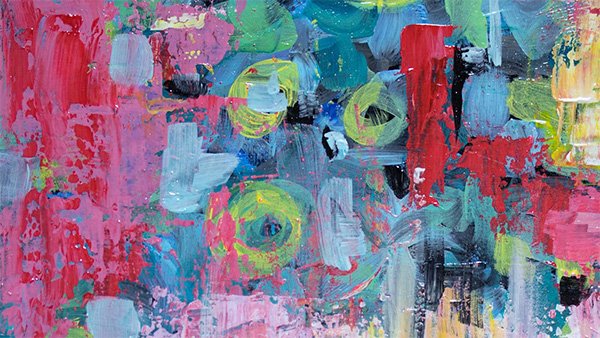
Matisse built feelings with flat planes the way architects stack steel and glass. A red wall doesn’t just sit there; it presses forward, almost into the viewer’s space. And a patch of cold turquoise suddenly cools the entire room inside the painting. So the eye doesn’t wander randomly. It walks through zones of emotion that the color blocks set up like walls and doors. Line helps, sure, but color holds the job of structure. The drawing whispers directions; the color gives the commands, sharp, fast, and without any diplomatic softening.
The Strange Honesty of His Interiors
Those famous rooms, with patterned rugs and wild wallpaper, don’t read like real interiors. They read like thoughts about interiors. And that’s the trick. A window becomes a blue rectangle that swallows attention; a table flattens into a disk of yellow that denies perspective on purpose. So the mind gets forced to admit something: daily life never feels tidy or correctly measured. Matisse paints that mental clutter through color. The objects stay simple, even childlike, because the real drama burns in the push and pull of hues, restless as conversation.
Scissors, Paper, and the Late Fireworks
When illness pinned Matisse to a chair, the story should’ve slowed. Instead, the cut-outs exploded. He traded brush and canvas for scissors and gouache paper, and somehow the color grew even louder. Leaves, dancers, stars, shapes so blunt they practically shout. And still, nothing crude about the control. So each piece balances hot and cool, dense and airy, like a seasoned composer stripping music down to rhythm and melody. These late works don’t whisper old-age wisdom. They slam down proof that invention doesn’t need small details; it needs nerve.
Serious color in painting splits into two eras: before Matisse and after. Painters once treated color as seasoning, something to sprinkle on top of drawing. He turned it into the main course. And that shift keeps echoing through abstraction, design, even advertising, long after the studio lights went dark. So every time a flat red screams from a poster or a gallery wall, a bit of his rebellion resurfaces. The work doesn’t just stay in museums. It keeps training eyes to accept color as thought made visible, urgent, and unapologetic.
Photo Attribution:
1st & featured image by https://www.pexels.com/photo/body-of-water-near-mountain-12241107/
2nd image by https://www.pexels.com/photo/colorful-wall-in-close-up-photography-9937240/

