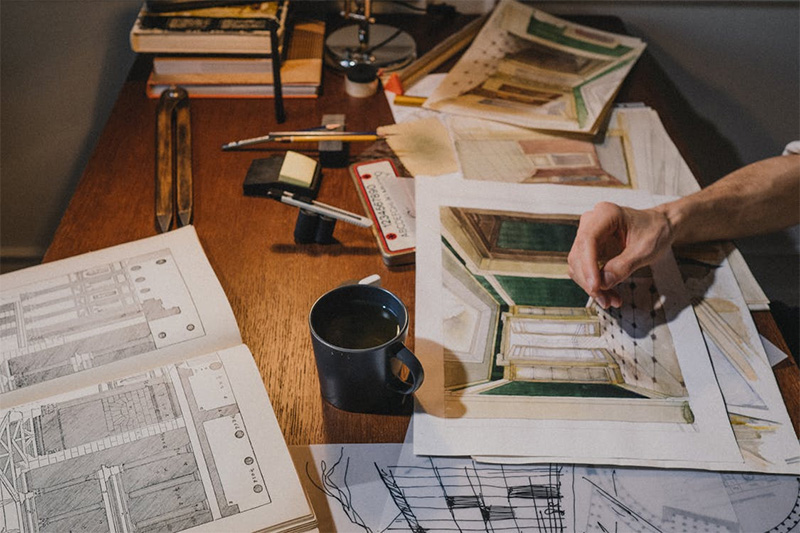
Everything in art comes down to seeing. Not the eye itself, everyone’s got one, more or less, but the habit of slicing up reality into lines and planes and then translating that flat chaos onto paper. Perspective, then, isn’t just geometry; it’s a way of ordering the mess. Beginners stall out here, paralyzed by vanishing points and technical diagrams as if Michelangelo himself spent afternoons with a protractor. Nonsense. Anyone can grasp this. The trick lies in breaking it down into practical moves, simple ones, and getting those hands dirty with real sketches, not endless theory. The rest? Muscle memory, plus a stubborn willingness to keep looking.
Start with One Point
Before running to cityscapes or spiraling staircases, focus on a box, yes, really, a single rectangle sitting obediently in space. Place one vanishing point smack in the middle of your horizon line. That’s home base for every receding line on the page. It looks almost dull at first glance but builds discipline fast: all horizontal lines parallel to the viewer stay straight; everything else radiates toward the point like spokes on a wheel. This isn’t art yet, it’s mechanical practice, but crucial groundwork nonetheless. The magic here is repetition; after ten boxes, suddenly the paper stops looking flat altogether and starts resembling an actual room.
Graduating to Two Points
Now swing open those barn doors of perception. Two vanishing points on opposite sides of the page mark a leap from sterile grids into believable depth, corner views always do that trick. Boxes drawn at this angle get livelier immediately; spaces seem to open up where there were none before. Lines shoot off left and right now, forcing attention sideways as well as back into space. Mistakes become glaringly obvious, a warped street or table jumps out like an optical illusion gone wrong, but corrections stick better than successes ever will. This process doesn’t flatter beginners but forces rapid improvement without mercy.
Three-Point Perspective Unleashed

Skyscrapers belong here, not literal ones only, but anything plunging dramatically upward or downward: comic book scenes, towering bookshelves, city blocks drawn from above like some aspiring architect’s fever dream. Drop a third vanishing point high or low (depending on whether you’re gazing up or peering down), and suddenly every line gets restless: verticals tilt for good reason now rather than by mistake alone. Complexity multiplies quickly, the mind complains about angles and foreshortening, but energy explodes off the page when done even half-competently. Mastery here isn’t precision so much as bravado mixed with careful guessing.
Details Make Space Feel Real
People think perspective is nothing but rulers and math, utter rubbish! Shadows creeping across floors? Doorways fading right where they should? Those happen because someone paid obsessive attention to how small details interact inside bigger structures: window sills get thinner as they recede; floor tiles shrink so slyly it hardly registers unless studied directly. Even scribbles help suggest volume if laid down deliberately instead of flailing around randomly, lessons learned from life drawing apply perfectly here too. Watch how objects overlap rather than drift aimlessly apart; every edge needs anchoring somewhere logical within this larger machine.
Perspective feels mysterious at first glance, a trick belonging to professionals, or mathematicians moonlighting as painters, but it boils down to habits built from patient repetition and sharp observation skills anyone can nurture over time. Don’t cling too hard to perfect diagrams; trust what feels right after fundamentals are set straight by steady practice sessions filled with mistakes and midcourse corrections aplenty. Every finished drawing becomes slightly easier than its predecessor until eventually perspective becomes instinctive background noise, that’s when true artistry begins showing up between those ruler-straight lines.
Photo Attribution:
1st & featured image by https://www.pexels.com/photo/view-on-mans-hand-on-printed-picture-on-deck-9618117/
2nd image by https://www.pexels.com/photo/sktetch-of-a-building-design-on-the-desk-17115287/

