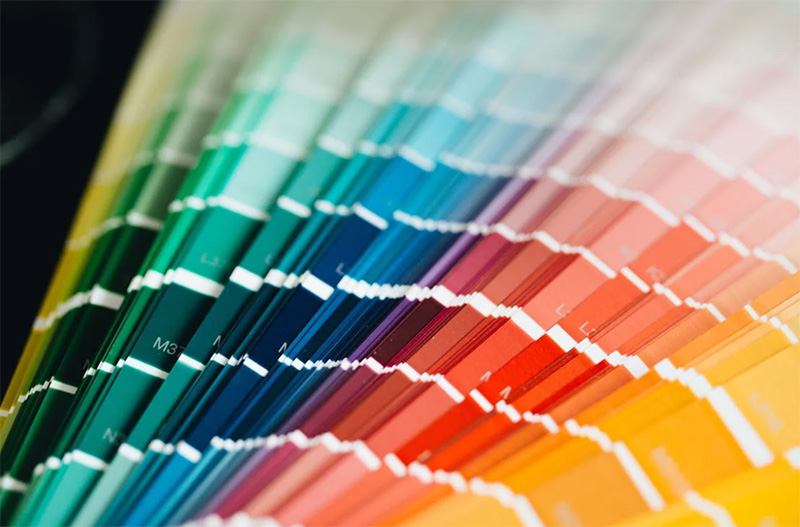
Color theory doesn’t live in paint chips and polite design charts. It lives in pulse rates, snap judgments, and that human habit of deciding what feels safe before facts arrive. A wall turns warm and a room feels smaller. A logo turns blue and a company “seems” reliable, as if honesty comes in hexadecimal. Color acts like a shortcut through the brain’s bouncers. It signals. It nudges. It provokes. People love to pretend they choose calmly, like philosophers at the grocery shelf. Color laughs at that. Color makes the first move, and emotion follows.
Warm Colors, Fast Hearts
Red, orange, yellow. These colors don’t ask permission. They show up with heat and speed, the visual version of a raised voice that might mean joy or danger. Red pulls attention because blood does. That link isn’t poetic, it’s biological. Red can feel romantic, urgent, competitive, even threatening, depending on context, and context does the heavy lifting. Orange plays the extrovert. It reads as friendly, loud, and hungry, which explains its grip on food branding. Yellow looks like sunshine until it looks like caution tape. Cheerful. Anxious. Both fit. Warm hues push arousal upward. They don’t guarantee happiness. They guarantee intensity.
Cool Colors, Quiet Authority
Blue and green slow the room down. Blue earns “trustworthy” because it resembles sky and clean water, two old cues for safety. The mind takes the hint, then invents a story about competence. Green slides toward growth and recovery, since plants keep turning sunlight into survival. Cool colors also carry a colder edge. Too much blue can feel distant, corporate, sterile, like a hospital corridor that never ends. Too much green can feel stale or sickly when it drifts toward gray. Calm isn’t always comfort. Calm can mean withdrawal.
Contrast and Saturation: The Volume Controls
Hue grabs headlines, then saturation and contrast run the show. Saturation controls how loud a color speaks. High saturation shouts. Low saturation murmurs, sometimes with elegance, sometimes with fatigue. Pastels often read as gentle because they refuse to compete. Neon reads as urgent because it threatens to scorch the retina. Contrast works like pacing in a thriller. Strong contrast creates drama and points the eye with a firm hand. Weak contrast can feel dreamy, or it can feel muddy and indecisive. A jolt of contrast wakes emotion up. A flat palette lets emotion drift into background noise.
Culture and Memory Rewrite Meaning
Color theory collapses without human history. White can mean weddings in one place and mourning in another. Purple can feel royal, spiritual, or oddly fake, depending on what a society teaches. Even inside one culture, memory rewires everything. A shade of green can feel like childhood safety because it matches a bedroom wall. Another green can feel like nausea because it matches a waiting room. Brands chase “universal” meaning, then act shocked when the audience brings baggage. Emotion comes from association, not magic. Color starts the conversation. Experience finishes it. A palette that works in a spa might fail in a classroom.
Color theory affects emotion because the visual system treats color as information, not decoration. People don’t just see red. People sense urgency. People don’t just see blue. People sense structure, distance, or reassurance, depending on the cues stacked around it. This is why a small shift in tone can change the mood of an app, a living room, a political poster, or a hospital sign. Color can’t force one feeling on everyone. Color can push, invite, or warn. The smart move sits in choosing with intent, then checking results in the messy world where emotion refuses to behave.
Photo Attribution:
1st & featured image by https://www.pexels.com/photo/palette-of-colors-14299950/
2nd image by https://www.pexels.com/photo/abstract-golden-yellow-and-peach-wave-art-33562122/

