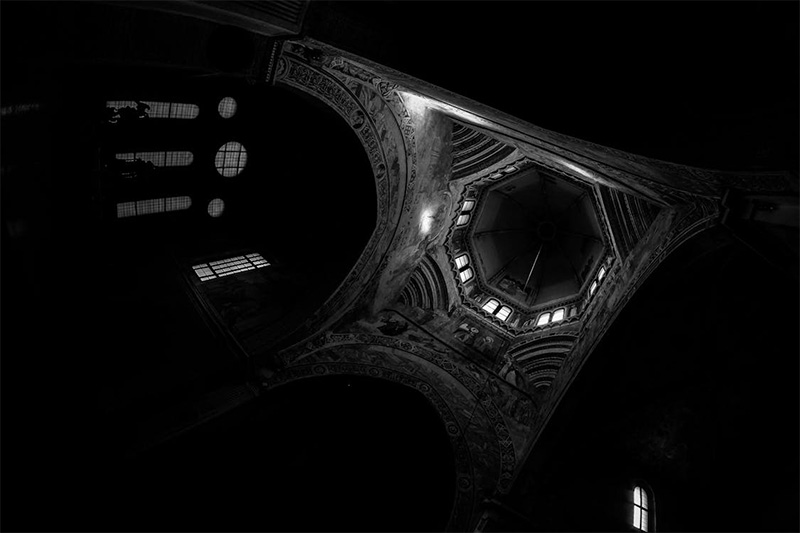
Drama starts before plot. It starts when photons pick a side. Light reveals and accuses. Shadow withholds and hints. That friction turns a flat scene into a charged one. A face half-lit doesn’t merely look “moody.” It broadcasts a problem. Something matters here, and someone might not survive the next sentence. Painters learned this long before cinema pretended it invented the trick. Stage directors know it too, even when budgets collapse and only one spotlight works. Give the eye a bright target and a dark boundary, and attention snaps into place. Drama follows because the mind can’t stand unfinished information.
Contrast: The Oldest Argument
High contrast behaves like a public argument in a quiet restaurant. Everyone looks. A bright subject against a dark field forces priority, and priority equals stakes. Low contrast feels like polite conversation, pleasant, safe. High contrast feels like moral conflict. Caravaggio didn’t paint gentle gradients. He threw light like a verdict, then let darkness swallow the rest. Film noir copied the method because crime stories need corners. A world without corners can’t hide a gun, a lie, or a kiss with consequences. The eye reads brightness as certainty and shadow as doubt.
Direction: Light Has an Accent
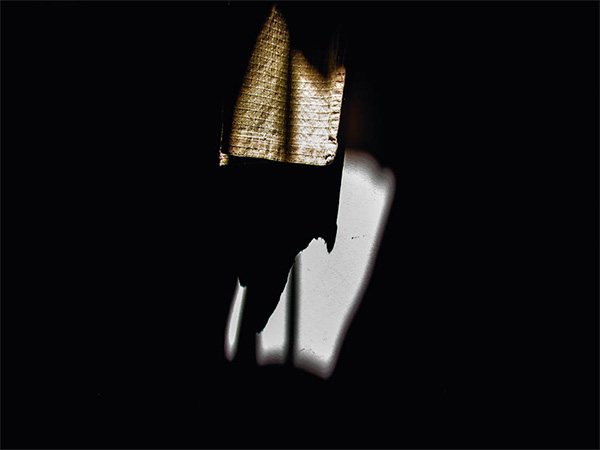
Light from above speaks one dialect. Light from below speaks another, and it isn’t polite. Overhead light fits noon, authority, and blunt honesty. Underlight belongs to campfire stories and interrogation rooms, where cheekbones sharpen and innocence looks suspicious. Side light brings a different scandal. It carves faces into two competing versions, public and private. This isn’t mysticism, it’s anatomy. The brow ridge throws a shadow. The nose draws a line. Directors chase “motivation” for light, as if the lamp must justify its existence. Window light suggests reality. Streetlight suggests danger.
Shadow: Negative Space That Talks
Shadow doesn’t act as a simple absence. It acts as an active shape, a second character that refuses to answer questions. A silhouette can turn a person into an idea. A shadow across the eyes can turn a hero into a suspect in half a second. Horror films know this. Monsters rarely look frightening under even, friendly light. Darkness edits the creature. It hides seams, spares the budget, and lets imagination do the expensive work. Portraits follow the same rule. A deep shadow under the jaw implies tension. A dark background compresses the world until the subject seems trapped.
Timing: Light Changes, Meaning Changes
Light has a schedule, and drama loves deadlines. Morning light forgives. Midday light judges. Late afternoon light seduces. It stretches shadows across the ground like long fingers, and it makes ordinary streets look like memory. Then night arrives and the rules flip. Small lights become powerful because they fight the dark. A single match can become a plot point. A neon sign can become a personality. Photographers chase “golden hour” because it makes images feel temporary. The sun sinks. The shadow grows. Time presses. Nothing creates tension like the sense that the light won’t last.
Drama depends on choices, and light forces choices onto the viewer. Look here, not there. Trust this, fear that. When artists control light, they control judgment. That’s why lighting arguments on film sets get nasty. Someone always claims the scene needs to look “natural,” as if nature hands out meaning for free. Nature doesn’t. Nature throws light around and lets creatures cope. Art selects and withholds. It turns shadow into a question mark and brightness into an accusation. The most dramatic images rarely show everything, because total visibility kills curiosity. Let the audience squint a little. Let the mind complete the missing pieces. The scene will start to breathe, then it will start to bite.
Photo Attribution:
1st & featured image by https://www.pexels.com/photo/grayscale-photography-of-house-ceiling-97253/
2nd image by https://www.pexels.com/photo/light-reflection-2420164/

