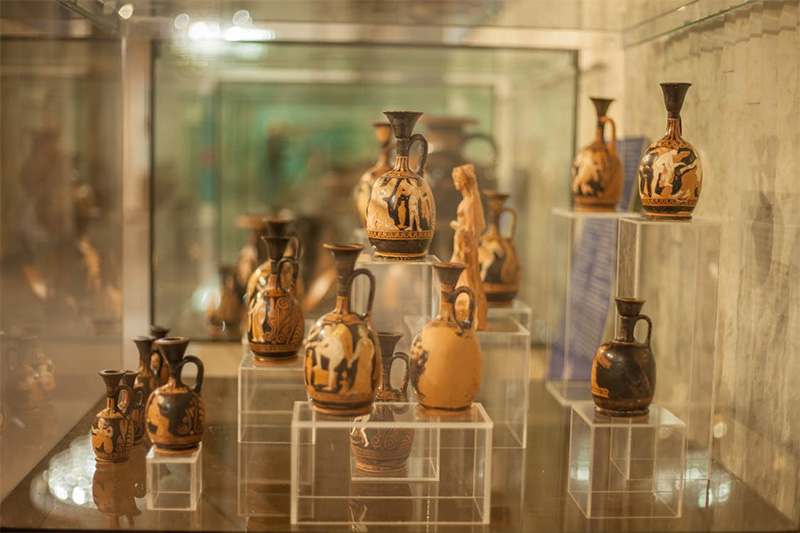
Greek pots look quiet in museum cases. They are not. They shout. Clay turned into argument, fashion, propaganda, and sometimes gossip. Every scratch and painted line tells a choice about power, belief, and taste. Shapes change when trade changes. Colors shift when firing technology improves. Scenes on the surface twist when politics or myth feels different. The story of these pots tracks a culture that never stopped editing itself. Pottery becomes the stubborn diary of a society obsessed with form and drama, and with audience and memory.
From Geometric Order To Human Nerves
Early Greek pots loved control. Tight patterns. Meanders marching around the body of the vase like little soldiers. Circles, triangles, zigzags. The so called Geometric style looked obsessed with borders and rhythm. Figures appear almost as an afterthought. Stiff stick bodies buried inside thick bands of pattern. Funerary scenes look like code rather than grief. That strict order reveals anxiety. A culture trying to pin things down. When horses and chariots creep in, design starts to loosen. Myth and movement push against the grid, daring it to crack further.
Black Figure Experiments In Storytelling
Then the figures grab center stage. Black figure technique slaps dark silhouettes on the red clay, then carves details with sharp incised lines. Gods and heroes pose like actors caught mid scene. The pot becomes theater in the round. Painters repeat famous myths, not to be faithful, but to show off wit and control. Muscles, armor, hair. All sliced into the surface with manic precision. The style favors clarity and status. Drink from this cup, feel close to Herakles. At least pretend to. The workshop turns into a myth factory, busy and loud.
Red Figure And The Joy Of The Body
At some point the painters revolt. Instead of black figures on red, they flip the scheme. Red figure pottery leaves the body of the person in natural clay, then paints the background dark. Lines get painted, not scratched. That small technical twist changes everything. Curved muscles. Foreshortened limbs. Twisted backs. The human body finally moves like a real thing, not a cutout. Emotion sneaks in. Playful scenes from symposia share space with raw, violent myth. The pot turns into a study in flesh and risk, and in quiet failure and doubt.
Regional Quirks And Late Style Fatigue
Athens hogs the fame, yet other centers talk back through clay. Corinth toys earlier with animal friezes. South Italian workshops in the Classical and later periods explode with overstuffed compositions. Extra colors, extra figures, crowded borders. Subtlety walks out. Spectacle walks in. That shift hints at changing markets. Wealthy clients wanted visual noise and narrative excess. Late pieces sometimes feel tired, copying old themes without the bite. Still, even the most bloated krater carries echoes of the sharp experiments that came before and quietly mutters them again.
These pots survived shipwrecks, grave robbers, and bad museum lighting. Styles rise and fade, yet certain obsessions stay. Control versus chaos. Pattern versus flesh. Public myth versus private pleasure. Greek pottery records those battles more honestly than many texts, because clay does not care about official stories. It cracks or it does not. Paint holds or flakes. The survival of a single cup can twist modern views of an entire period. Every shard on a shelf keeps arguing with the present about what mattered and what did not, then asks again.
Photo Attribution:
1st & featured image by https://www.pexels.com/photo/ancient-greek-pottery-on-display-in-museum-30636023/
2nd image by https://www.pexels.com/photo/man-s-head-bust-417826/

