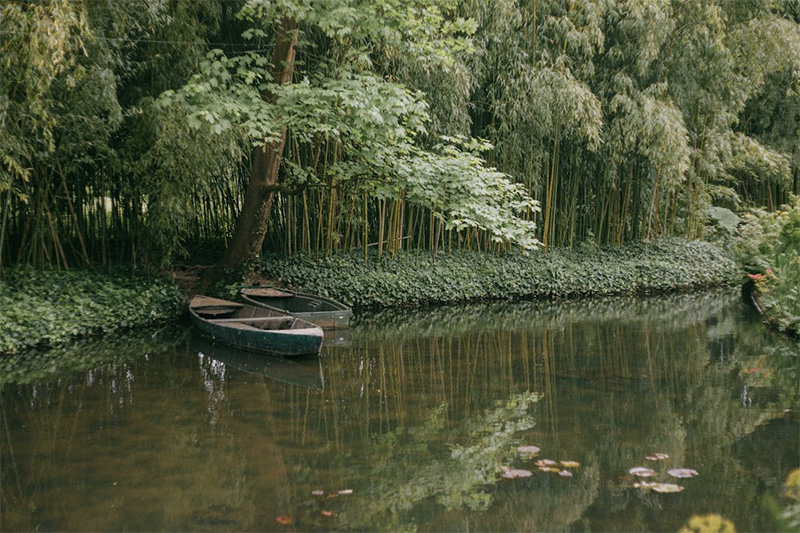
Monet didn’t paint water. The man painted time pretending to be water. Stand in front of one of those river scenes and the surface keeps sliding away, as if the eye showed up late to the party. And light, that old tyrant, stops bossing everyone around and becomes just another guest. Painters before him treated reflections like mirrors. He treated them like gossip: unstable, distorted, half-true. So the brush stops describing objects and starts tracking flickers. That change rewired how people see outdoor color, and how they imagine seeing itself.
Color First, Objects Later
Monet didn’t care what the object “really” looked like. The eye catches color patches first, explanations later, and he trusted that brutal fact. And light on water scrambles shapes faster than on stone, so color becomes the only honest anchor. Boats, bridges, reeds, they dissolve into stripes and smears because the surface breaks them. So the brush doesn’t outline; it collides with nearby color. The so‑called subject shrinks. The real subject turns into temperature shifts between cool violets and hot oranges vibrating side by side, trading blows like quiet, disciplined fighters in the same ring.
Broken Brush, Moving Surface
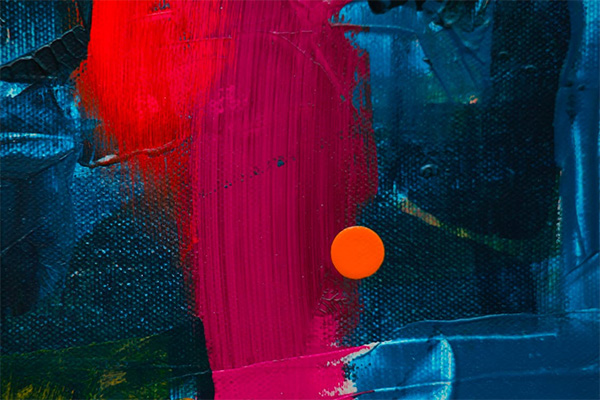
Watch the brushwork and the river starts breathing. Short, nervous strokes sit next to long horizontal slides, and the eye has to keep hopping. And that constant hopping mimics ripples nudged by wind or a passing boat. No smooth blending, no polite transitions, just fragments that lock together only at a distance. So the surface never fully settles; it shivers. Painters who smooth every edge freeze water into blue glass. Monet breaks the touch, and that broken touch gives each small patch its own pulse, like tiny heartbeats scattered across the canvas and refusing to sync.
Light as Glare, Not Halo
Earlier painters treated light like some noble halo descending from the heavens. Monet treats it like glare that blinds and bleaches. On water, light doesn’t gently rest; it attacks. So he hits the canvas with thick, almost crude, strokes of pale yellow, white, or mint, dropped right on top of darker bands. And those crude marks don’t imitate detail; they imitate squinting. Reflections lose dignity. They stretch, bend, and snap because the light crushes them. The shine lives in contrast, not in some mystical sparkly glaze, and it behaves like an interrogation lamp, not a choir of angels.
Time Folded into a Surface
Water remembers every passing second. A gust, a cloud, a drifting leaf; the surface folds them in, then forgets them. Monet paints that amnesia. And he does it by stacking moments: wet strokes laid into other wet strokes, colors bleeding just enough to suggest motion already gone. So each panel reads less like a single view and more like a compressed sequence. A film strip without frames. The spectator doesn’t witness a frozen instant. The spectator stares at time smeared horizontally, disguised as a pond, while the shore pretends nothing strange just happened in front of it.
Museums behave as if those river scenes offer calm. Nonsense. The paintings hum like live wires. And the real trick isn’t prettiness; it’s discipline. Monet stands outside, stares until the brain stops naming things, then chases only what flickers. So the water stops being an object and becomes a problem: how to trap change with colored mud. That problem still haunts painters and photographers. Light keeps breaking surfaces; surfaces keep lying about light. His answer stays sharp: trust the flicker, not the thing, and let confusion speak louder than tidy description.
Photo Attribution:
1st & featured image by https://www.pexels.com/photo/tranquil-pond-with-boats-in-giverny-garden-scenery-29173987/
2nd image by https://www.pexels.com/photo/abstract-painting-1145720/

