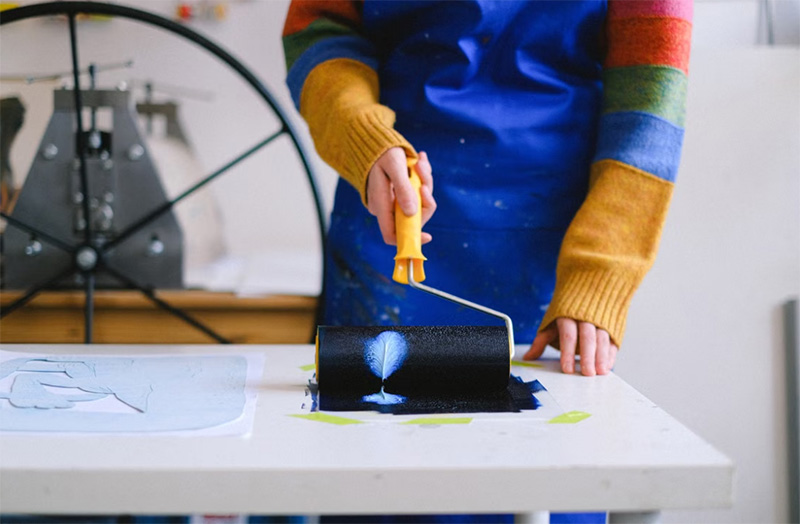
Printmaking sits between drawing, sculpture, chemistry, and craft. That mix matters. A print is not merely a copy, and anyone who says otherwise misses the point. The artist builds a matrix, inks it, and transfers an image through pressure, contact, or chemical action. Each method creates its own look and logic. Some techniques carve away. Some depend on grease and water refusing to cooperate. Some bite metal with acid. To understand printmaking, the focus must shift from pictures to surfaces, pressure, resistance, and beauty of transfer. Technique shapes meaning from the first mark onward.
Relief Prints
Relief printing is the oldest and most direct approach. The artist cuts away the areas that should stay blank, leaving the raised surface to receive ink. Ink sits on top, then paper meets that surface under pressure. Woodcut and linocut lead this group. Woodcut often shows grain, giving the image rough energy. Linocut allows cleaner cuts and smoother curves. This method demands commitment because every cut removes material for good. That risk sharpens decisions. The bold contrast and stripped-down shapes come from subtraction, not decoration. Relief favors clarity over softness, and that honesty gives it force.
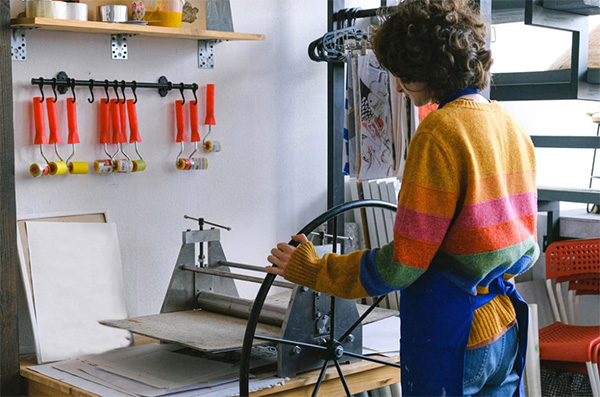
Intaglio Depth
Intaglio reverses the logic of relief. Ink settles into lines or pits below the surface of a metal plate, usually copper or zinc. The printer wipes the surface clean and leaves ink in the recessed marks. Damp paper and a press pull that ink out. The result often carries unusual depth and richness. Engraving, etching, drypoint, and aquatint all belong here. Each one creates a different kind of line or tone. Tiny changes in wiping can shift the mood of the whole image. Metal remembers every decision. Few methods reward patience so completely, because small technical choices can alter atmosphere, texture, and weight.
Lithography
Lithography depends on a simple conflict. Grease and water don’t mix. The artist draws with greasy material on stone or a prepared plate. Chemical treatment fixes the image and makes the blank areas hold water. When oily ink rolls across the surface, it sticks to the greasy drawing and avoids the damp parts. No carving is needed. That gives lithography unusual freedom. It can capture the softness of crayon and the looseness of a wash with striking accuracy. The image often feels drawn rather than carved. That quality makes lithography valuable for artists who want directness without sacrificing reproducibility.
Screenprinting
Screenprinting pushes ink through a mesh screen while a stencil blocks selected areas. The image builds in layers, often one screen for each color. This method can look handmade, industrial, or both at once. That explains its reach across fine art, posters, clothing, and commercial design. Registration becomes crucial because the layers must align. When they do, the result has crisp impact and strong color. The inks can sit thick on the surface, giving the print a bold, aggressive presence. Screenprinting loves clarity. It also thrives on repetition, which is why it became a powerful tool for modern graphic culture.
These methods differ in tools, chemistry, and visual effect, yet they share one truth. Printmaking is an art of process. Relief favors bold shape. Intaglio builds depth. Lithography preserves the energy of drawing. Screenprinting turns layering into graphic force. None of them deserves reduction to a simple copying method. Prints are multiples, but they are not empty duplicates. Ink shifts. Surfaces respond. Small changes alter each impression. That fact gives printmaking its character. The artist works through material resistance, and the final image carries that struggle in every mark. That is why printmaking remains vital. It joins planning, labor, and surprise in a way art forms can match.
Photo Attribution:
1st & featured image by https://www.pexels.com/photo/unrecognizable-painter-creating-artwork-on-paper-with-roller-5641845/
2nd image by https://www.pexels.com/photo/unrecognizable-skilled-woman-at-etching-press-5642074/

