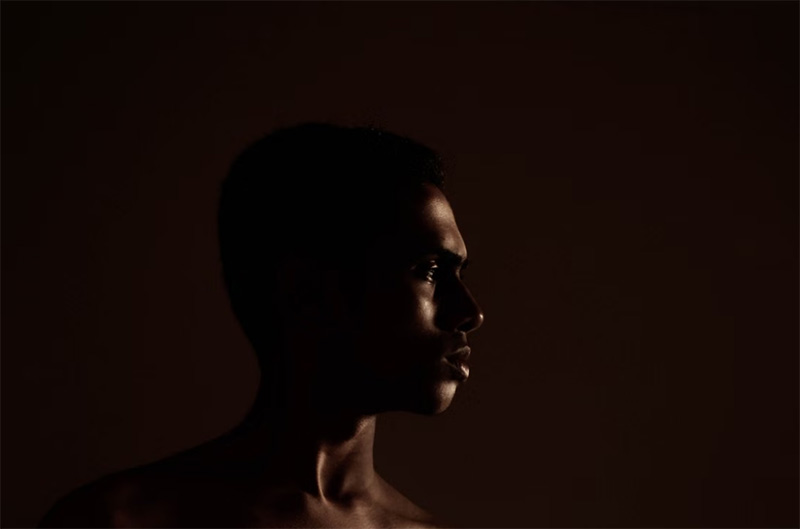
Cinema never escaped painting. That fact embarrasses people who talk about cameras as if lenses invented drama from scratch. They didn’t. Long before film stock, painters learned that light can accuse, isolate, and sanctify at once. Chiaroscuro arranges brightness against darkness so forcefully that the image stops being a record and starts acting like fate. That’s the key. Not decoration. Fate. A face half-lit doesn’t just look stylish. It looks judged, divided, exposed. Audiences still react because the brain reads contrast fast. The eye snaps toward light. Darkness breeds questions. Story begins there.
Light as Verdict
Most visual trends age badly because they depend on fashion, and fashion spoils fast. Chiaroscuro keeps its power because it goes straight for perception. Brightness claims importance. Shadow withholds information. That split creates moral pressure, even when the story rejects easy morals. A character emerging from darkness feels chosen or cornered. A room cut by a blade of light feels dangerous before anything moves. That’s cinema at its most primal. No speech required. Silent film directors knew this. Film noir built a church around it. Thrillers and horror films still use the trick because it works on instinct.
The Face Becomes a Plot
Human faces are absurdly expressive. What gets missed is how much lighting edits a face before the actor does anything at all. Flat light often tells the whole truth too quickly. Chiaroscuro withholds. It turns cheeks into terrain, eyes into questions, mouths into unstable evidence. Half a face in shadow suggests conflict even in stillness. A forehead struck by light can imply revelation, arrogance, panic, or grace, depending on the frame around it. This is why close-ups under strong contrast feel cinematic. The face stops being documentation and becomes an event. Mystery on skin pulls tension tighter than exposition.
Space Learns to Breathe
Flat illumination explains a set completely. Once everything gets explained, the room dies a little. Chiaroscuro does the opposite. It lets space keep secrets. Corners recede. Doorways threaten. Ceilings vanish. A lamp on a table can carve out a temporary island of safety while the rest of the frame mutters danger. This isn’t just pretty composition. It changes how movement feels. A body crossing from shadow into light looks like a decision made visible. Concealment expands the frame. What isn’t shown acquires pressure. The unseen starts pressing on the seen, and suddenly the image has atmosphere instead of information.
Old Method, New Machines
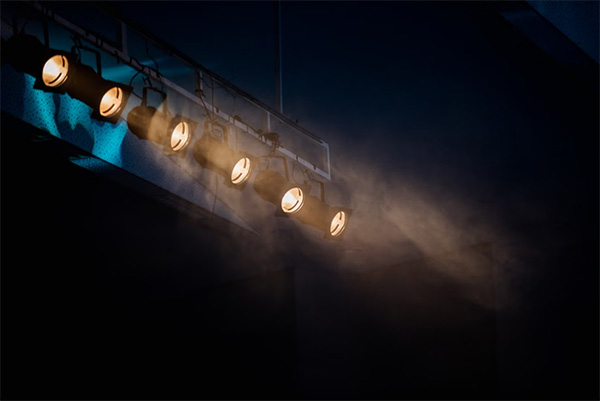
Digital cinema was supposed to make severe contrast feel less necessary. That prediction collapsed. Higher sensitivity and cleaner shadows did not kill chiaroscuro. They made control more exact. The danger lies in excess polish. When contrast looks massaged by software instead of motivated by drama, the result feels sterile. Strong lighting choices still need conviction on set. A practical bulb, a window slit, a hallway fixture, a streetlamp through blinds. These sources anchor style in believable space. Viewers may not name the technique, though they feel its authority instantly. Chiaroscuro restores priority. It tells the eye where to go, what to fear, and what to suspect.
The endurance of chiaroscuro says something blunt about storytelling. Audiences don’t crave endless visibility. Audiences crave significance. Light alone rarely provides that. Darkness alone rarely provides that either. The friction between the two produces drama with startling efficiency. One bright plane against black can make an image feel ancient and immediate, like a cathedral meeting a crime scene. That collision explains the lasting cinematic charge. The technique survives because it organizes emotion, space, and attention with ruthless economy. Cameras will keep arriving. Fine. As long as stories need tension, concealment, revelation, and faces haunted by thought, this method will keep speaking in a voice the screen can’t outgrow.
Photo Attribution:
1st & featured image by https://www.pexels.com/photo/moody-portrait-of-young-man-in-dark-lighting-33467670/
2nd image by https://www.pexels.com/photo/line-up-spotlights-hanging-on-a-ceiling-12092991/

