The term “Renaissance person” gets thrown around at meetings and dinner tables like a compliment that’s lost its edge. In most cases, it means someone who dabbles. Then the records of one Florentine break into the conversation and reset the scale. This single individual drew human anatomy with surgeon-level accuracy, designed war machines centuries ahead of their time, painted with unsettling psychological depth, and still found space to obsess over flight, optics, and music. The figure at the center of this storm didn’t just do many things. He pushed every field he touched toward a new standard.
Art That Thinks Like Science
His paintings don’t just look beautiful; they think. In one panel, light falls as if calculated by an engineer. In another, body weight shifts with such precision that every tendon seems to carry a quiet equation. Perspective, shadow, and color theory turn into tools, not decoration. The mind behind the brush studied how the eye actually sees, then used that insight to direct attention like a quiet traffic cop. Faces reveal not only emotion but motive. A half-smile hides a hundred questions. This isn’t art as wallpaper. It’s art as a research lab, turning observation into visual strategy.
Anatomy Lessons with Charcoal and Scalpel
Most people sketch a hand and call it a day. This man dissected bodies to understand how the tendons pulled each finger, then drew the system from every angle. Muscles, bones, organs, even the heart’s valves, all mapped long before modern anatomy textbooks. The notebooks don’t feel like side projects. They read like a full medical curriculum, compressed into ink and chalk. Each drawing pairs with notes on function: how a muscle contracts, how a joint rotates, how age changes tissue. Art students today still trace those diagrams. Surgeons recognize the structures. The line between artist and scientist disintegrates on every page.
Engineering Tomorrow with Yesterday’s Tools
Centuries before jet engines or tanks rolled across battlefields, sketches of flying machines and armored vehicles already sat in his folios. Not all of them would work, and that’s the point. He treated the world like a test bench. Gears, pulleys, and counterweights spin through his designs with a kind of mechanical grammar. Bridges that assemble fast, canal systems that redirect water, stage machinery that pulls off impossible illusions for court spectacles. Military leaders sought his ideas not because they wanted pretty pictures, but because the concepts bit into real problems. He treated war, construction, and entertainment as engineering challenges begging for better answers.
Curiosity as a Daily Operating System
The real engine behind all this output wasn’t talent. It was relentless curiosity, almost annoying in its intensity. Questions filled his pages: how does water swirl in a river bend, why does the moon shine, what keeps birds aloft? Each question led to tests, sketches, notes, and more questions. No firm boundary separated disciplines. A study of flowing hair linked to water motion. A theater project sparked research into optics and sound. This mindset turns into the clearest lesson for modern life. Expertise still matters, but the real advantage belongs to the person who keeps asking better questions across every field they touch.
Modern culture loves specialization. Job titles shrink, roles narrow, and people camp inside tiny expertise boxes. The historical record of this one figure argues for a different model. Range doesn’t dilute skill; it feeds it. Art sharpened observation, which improved anatomy, which strengthened engineering, which circled back into better art. The cycle never stopped. That’s the core message leaders, students, and professionals ignore at their own loss. The world rewards those who cross boundaries, test assumptions, and let curiosity set the agenda. The blueprint already exists, written in ink, chalk, and a restless refusal to stay in one lane.
Photo Attribution:
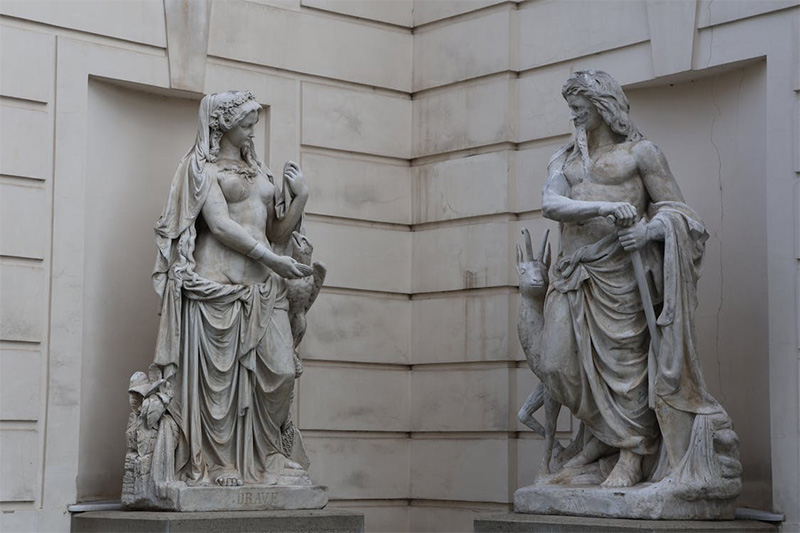
1st & featured image by https://www.pexels.com/photo/classical-sculptures-in-vienna-austria-courtyard-35414472/
2nd image by https://www.pexels.com/photo/relaxed-domestic-cat-lying-outdoors-in-sunlight-35354545/

