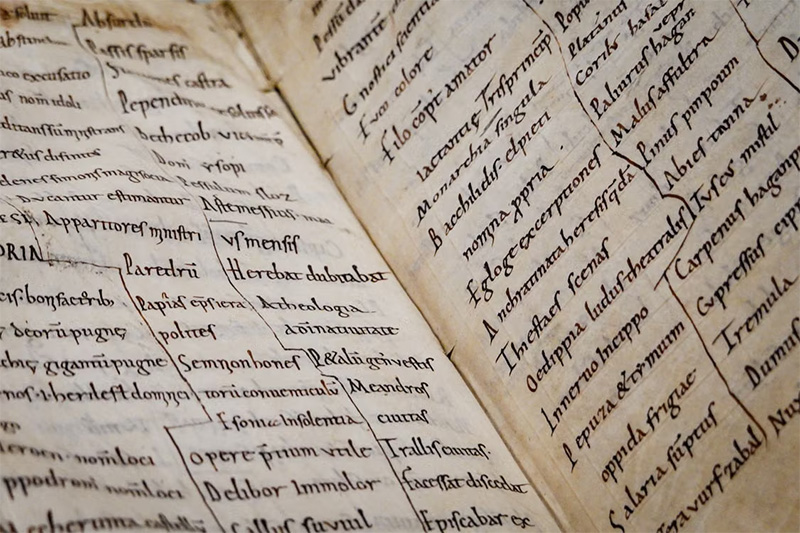
Medieval manuscripts seem solemn at first glance. Gold leaf, saints, kings, and stiff ceremony dominate the page. Then the eye slips outward and the whole performance changes. In the margins, artists played. Snails attack knights. Monkeys mock scholars. Rabbits chase hunters. Faces bloom from vines like gossiping plants. This was not empty filler. It was wit, release, and sometimes sharp mockery. The Middle Ages did not move in one grim file of prayer and discipline. People laughed. People doodled strange beasts in holy books. That contrast matters because the edges of the page often reveal a livelier truth than the official image in the center.
Where Rules Loosen
Margins existed because books had structure, and structure always leaves scraps of space. Those scraps invited invention. The main text carried authority, whether scripture, law, or history. The border could joke, wander, or sneer. That split matters. Official culture prized hierarchy, and the page itself displayed it. Yet the edge kept resisting. A knight fighting a giant snail looks ridiculous, and that absurdity carries force. Such images could poke at fear, vanity, and the theater of chivalry. Order never fully controlled the imagination. Not in the monastery. Not at court. Not on the page.
Sacred Pages, Odd Creatures
Some of the strangest images appear in devotional books meant for prayer. That fact alone ruins the lazy idea that medieval religion had no room for humor. A psalter might show sacred scenes in one area and a naked acrobat or weapon-wielding rabbit in another. Modern viewers often treat that mix as disrespect, which misses the point. Medieval culture often joined moral seriousness with satire and play. A grotesque creature in the border could amuse, but it could also hint at folly, temptation, or disorder. Laughter and warning were not enemies. They often worked together.
Comedy With Fangs
These images did more than entertain bored scribes, though boredom surely helped. The best marginal art bites. Rabbits hunting men reverse the normal chain of power. Monkeys dressed like clerics jab at vanity and imitation. Hybrid bodies drag hidden vice into view. This kind of visual humor shares blood with carnival and satire, where society briefly turned itself inside out. The joke lands because order gets flipped. It also unsettles because it shows how thin that order can be. A margin can act like a pressure valve. It can also act like a sly attack on authority.
Why They Still Matter
People remember these images because their spirit feels fresh. Not fresh in style. No one mistakes a medieval monkey for a modern cartoon. The connection lies in the sarcasm. A strange little drawing at the edge of a page can collapse centuries in an instant. The artist stops seeming remote and starts seeming clever, impatient, and very human. That matters because these borders wreck the old myth that medieval people lacked humor or self-awareness. The margins keep exposing a period full of wit, contradiction, and irreverence. That old myth deserves to collapse.
These borders are not trivial leftovers. They are evidence of play, criticism, and imagination working beside official tradition. The center of the page showed what a culture wished to honor. The edge showed what it feared, mocked, enjoyed, and could not suppress. That is why the images still grip modern viewers. They reveal a civilization thinking sideways through jokes, monsters, and reversals. A snail facing a knight may never yield one fixed meaning, and that uncertainty gives it power. Neat explanations flatten living art. The margins refuse flattening. They grin from the side of the page and remind history to stop pretending it was ever tidy.
Photo Attribution:
1st & featured image by https://www.pexels.com/photo/close-up-of-ancient-manuscript-with-latin-text-30019470/
2nd image by https://www.pexels.com/photo/close-up-of-an-abstract-line-painting-with-faces-15269511/

