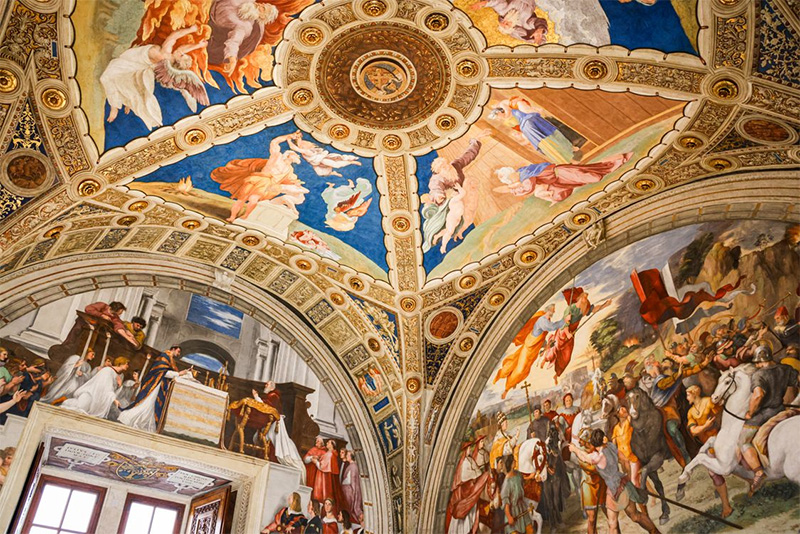
Renaissance art has a reputation for being “the good stuff,” which sounds like a museum gift shop slogan, yet it points to something real. Around the 1400s in Italy, painters and sculptors stopped treating the world as a flat symbol chart and started treating it as a place with weight, light, bones, weather, and human contradiction. Saints still appeared, patrons still paid, politics still lurked. The difference came from ambition. Artists wanted images to persuade the eye the way a skilled speaker persuades a crowd. Is that spiritual, scientific, or just competitive swagger. It’s all three.
What Changed. Space, Bodies, and Confidence
The most obvious shift involves space. Medieval art often arranged figures by importance, not by where bodies could actually stand. Renaissance artists cared about where a foot could plant itself. Linear perspective turned a painted wall into a convincing room, street, or chapel. Bodies changed too. Muscles returned as structure. Drapery started obeying gravity. Faces gained psychology. A Madonna could look tired. This signals a new confidence about observation. Nature became a teacher, not an enemy of faith. That attitude sounds modern because it is a cousin of modern thinking, even when the subject stays religious.
The Power Trio. Patron, Workshop, City
A beginner often imagines a lone genius in a studio. Renaissance art laughs at that fantasy. Money ran the show. Popes, bankers, guilds, and city councils ordered images for very specific reasons. Florence wanted civic pride. Venice wanted splendor that matched its trade empire. Rome wanted authority that could silence rivals. Workshops mattered as much as masters. Apprentices ground pigments, copied drawings, painted drapery, and learned by repetition. Contracts dictated size, materials, deadlines, even how much gold leaf had to glitter. Competition between cities pushed artists to invent. Pride paid for beauty.
How to Look. The Trick of Light and Story
Looking well requires a method. Start with light. Where does it come from. What does it hit first. Renaissance painters used light to build volume, guide attention, and set mood. Chiaroscuro, that push and pull between shadow and brightness, can make a cheek feel touchable. Next comes composition. Notice how lines, gestures, and glances herd the viewer toward the main event. A hand points, a doorway frames, a horizon steadies the drama. Story matters too. Artists chose the instant that explains what just happened and what will happen next.
Key Names Without the Mythology
Certain names appear everywhere, and beginners should meet them without turning them into marble statues. Giotto sits at the doorstep and pushes figures toward real space and emotion. Masaccio makes perspective and weight feel unavoidable. Donatello brings sculpture back to street-level humanity. Botticelli paints elegance and unease in the same breath. Leonardo studies anatomy and atmosphere with a restless mind. Michelangelo treats the body like a heroic language, carved and painted with brutal certainty. Raphael sells harmony so well that viewers forget how hard it is to build. Titian turns paint into flesh and light into velvet. These people worked, argued, took jobs, missed deadlines, and chased fame.
Beginners often ask for a shortcut, a single rule that explains Renaissance art. That desire misses the point. This art thrives on tensions. Faith meets observation. Public messaging meets private devotion. Antique ideals meet messy living bodies. The sensible approach starts small. Pick one painting or sculpture and interrogate it. Track the light. Test the space with the eyes. Notice who paid for it and why. Watch how the artist stages the human figure, not as a diagram, but as a claim about dignity, desire, fear, and control. Patience wins. Renaissance art rewards repeated looking because it was built to hold attention.
Photo Attribution:
1st & featured image by https://www.pexels.com/photo/ornate-renaissance-fresco-ceiling-35708938/
2nd image by https://www.pexels.com/photo/silhouette-figures-reaching-out-to-each-other-30847552/

