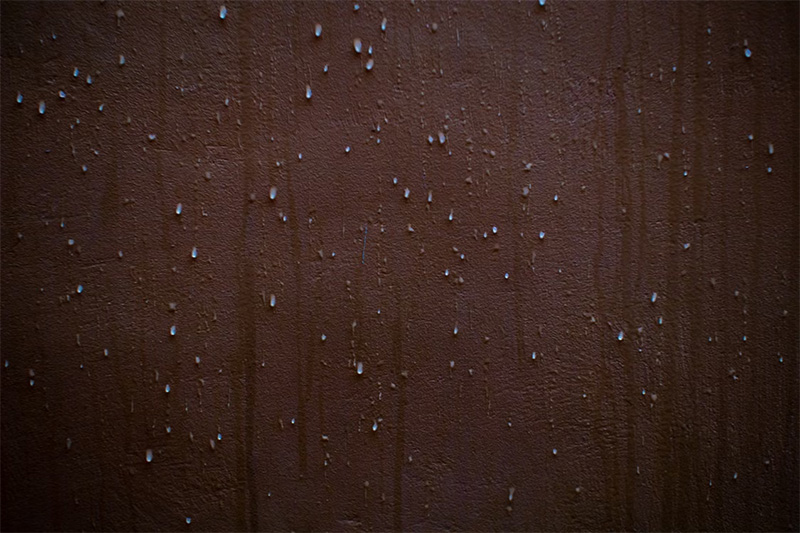
Rain defeats literalism. Any painter who tries to count streaks and polish each droplet has already lost the weather. The eye doesn’t read a storm that way. It catches speed, blur, reflection, interruption. It notices what rain does to the world more than each falling line. That fact changes everything. A convincing rain scene grows from suggestion, not bookkeeping. This isn’t laziness. It’s control. Good painting depends on selection. A portrait leaves out pores. A landscape leaves out leaves. Rain demands editing.
See the Damage
The smartest route into rain starts with consequence. Wet pavement darkens. Colors sink and flare in reflection. Rooflines drip. Distant forms soften as moisture thickens the air. Clothing clings. Hair collapses. Trees lose their neat silhouette and turn shaggy at the edges. Viewers believe effects faster than symbols. A hundred diagonal lines can still look fake if the ground stays dry and the figures stand stiff. A slick street, painted with conviction, can announce a downpour before one obvious raindrop appears. The best storm shots show headlights smearing across asphalt, not silver needles in the air.

Edges Tell the Story
Rain ruins crispness. That is one of its great visual signatures. Hard edges belong to dry noon, to architecture behaving itself, to a world that has stopped moving long enough for inspection. Rain refuses that contract. Objects at a distance blur into one another. Vertical forms melt slightly into the atmosphere. Reflections wobble. Brushwork should answer that chaos with intelligence, not panic. Softening selected contours does more than adding dozens of lines ever could. The obsession with detail often comes from fear. Fear of leaving things unresolved. Yet unresolved passages create weather. A painter who keeps every window frame sharp in a storm scene has missed the point.
Rhythm Over Droplets
Rain reads as pattern before it reads as object. The eye gathers repetition, direction, and tempo. Slanted marks can help, though only when handled with restraint. Scatter them unevenly. Let some passages remain nearly empty. Cluster others near dark shapes where contrast lets the suggestion flicker into view. Uniform marks kill the illusion dead. Nature rarely arranges itself like wallpaper, and storms certainly don’t. Here the painter enters a strange alliance with music. Rhythm carries belief. A few quick strokes across a shadowed coat sleeve, a broken drag through the sky, a vertical drip on a window. Suddenly the air feels occupied.
Light Makes It Wet
Nothing sells rain faster than light on wet things. Dry surfaces tend to state their color plainly. Wet surfaces deepen, reflect, shimmer, and throw brightness into places that looked dull earlier. This is where many paintings either come alive or collapse into mud. The artist must choose where highlights strike and where darkness pools. Puddles should not become mirrors everywhere. Selectivity rules again. A thin bright note along a curb can do more than a giant glossy street. Windows can glow through haze. Streetlamps can bloom into halos. Skin can pick up a cold sheen. Rain invites structure and mood into the same soaked argument.
The chase after every drop belongs to anxious illustration, not painting at its most alive. Rain asks for judgment. It asks what to sharpen, what to blur, what to darken, and what to let vanish into damp air. That demand may irritate the beginner who wants a formula. Good. Painting improves when certainty gets rattled. Weather exposes weak seeing. A dry object can survive mediocre observation. A storm cannot. The convincing image comes from cause, rhythm, softened form, and treacherous light working together. Once those forces lock into place, the viewer doesn’t need proof in the form of a thousand tiny streaks. The viewer feels the rain.
Photo Attribution:
1st & featured image by https://www.pexels.com/photo/water-drops-on-a-wall-8858787/
2nd image by https://www.pexels.com/photo/black-mobile-phone-under-blue-water-8481931/

